
Third-Party Insurance
Covers specified legal liabilities arising from injury, death or property damage to a third party, subject to applicable law and policy terms. It does not cover accidental damage to your own two-wheeler.
Third-party starting at ₹538/yr*
Two-Wheeler Insurance
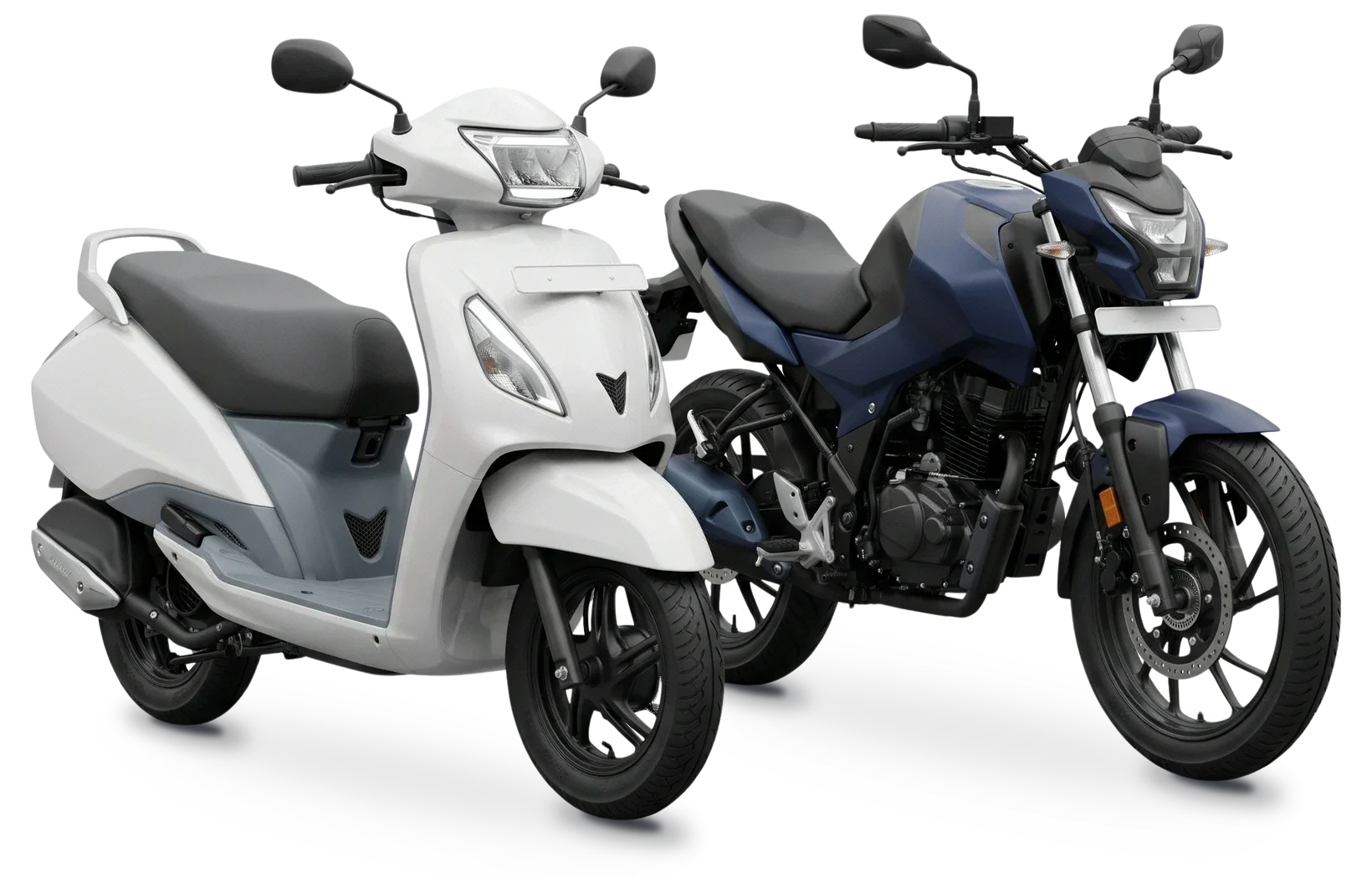
Your bike or scooter helps you travel to work, meet family and manage everyday life. The right insurance can help protect you against specified risks on the road. Explore two-wheeler insurance options with InsureMile. Understand third-party, own-damage and comprehensive cover, compare available benefits and get assistance with purchase, renewal and policy-related queries.
Mandatory Protection
Two-wheeler insurance can provide financial protection against covered third-party liabilities and, where selected, damage to your own vehicle. The protection available depends on the type of policy, selected covers, exclusions and policy conditions.
Third-party motor insurance is legally required for a two-wheeler used in public places in India. Customers should check that their policy is valid and appropriate for their vehicle.
Choose the protection scope that matches your riding requirements and vehicle profile.
Covers specified legal liabilities arising from injury, death or property damage to a third party, subject to applicable law and policy terms. It does not cover accidental damage to your own two-wheeler.
Covers specified accidental damage or loss to your insured two-wheeler, subject to policy terms. It is generally purchased alongside a valid third-party policy.
Generally combines third-party liability and own-damage protection. The actual scope depends on the policy wording, exclusions and selected add-ons.
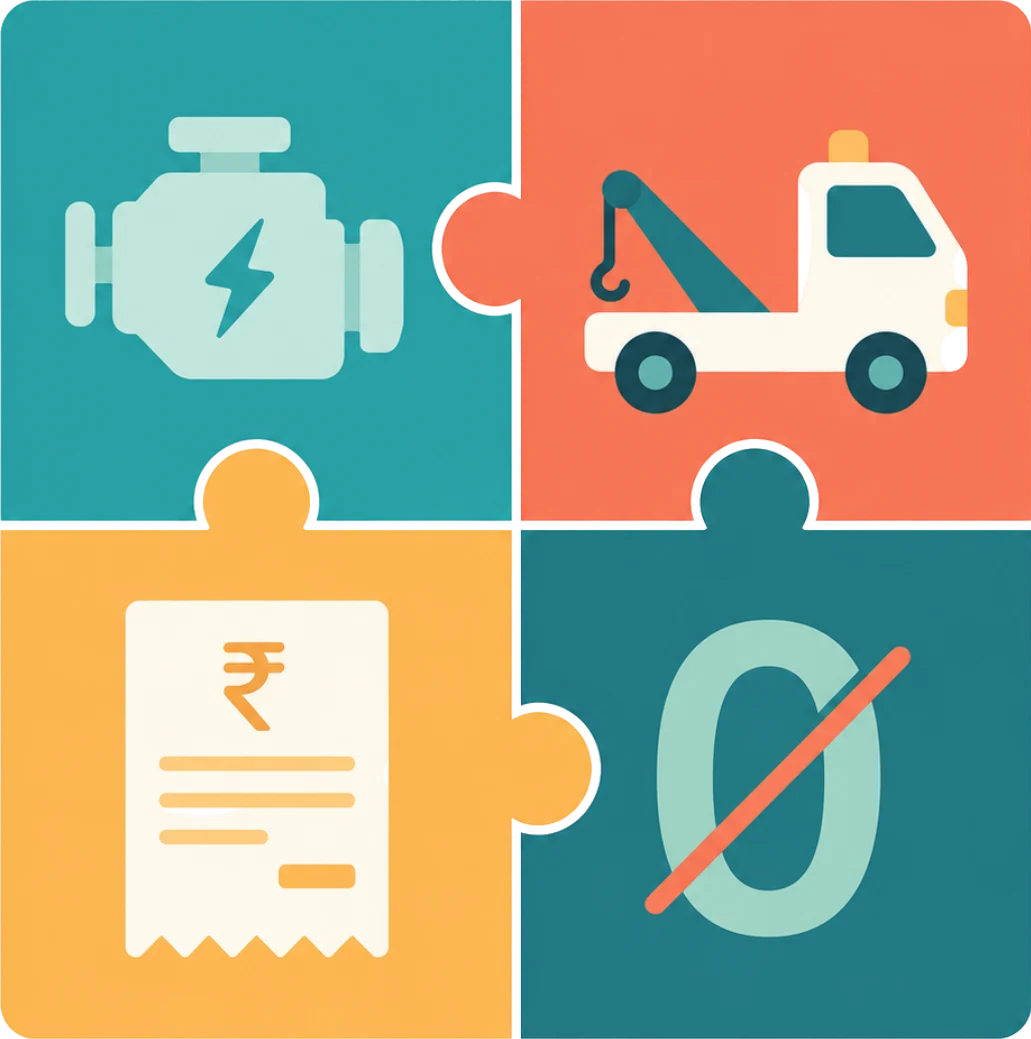
Depending on the insurer and product, optional add-ons may include zero depreciation, roadside assistance, engine protection, return to invoice and consumables cover. These are not available with every policy and may have eligibility requirements, limits, deductibles and exclusions. Customers should check the insurer's product wording and policy schedule before selecting an add-on.
Three essential financial parameters govern your two-wheeler coverage, cost, and claim payouts.
Insured Declared Value is an important factor in own-damage cover and is used in claim calculations for certain total-loss or theft situations, subject to policy terms. It is not necessarily the resale value of the vehicle.
The amount payable for the selected policy. It depends on factors such as vehicle details, location, policy type, IDV, claims history, add-ons and insurer pricing.
The portion of an admissible claim that the policyholder must bear, as specified in the policy.
Third-party bike insurance premiums are determined annually by the Insurance Regulatory and Development Authority of India (IRDAI). Rates are uniform across all insurers.
| Engine Capacity (CC) | 1-Year Mandatory Premium | 5-Year New Vehicle Premium |
|---|---|---|
| Up to 75 cc | ₹538 | ₹2,901 |
| 75 cc to 150 cc | ₹714 | ₹3,851 |
| 150 cc to 350 cc | ₹1,366 | ₹7,365 |
| Exceeding 350 cc | ₹2,804 | ₹15,117 |
Statutory IRDAI third-party tariffs are subject to applicable GST (18%). Comprehensive policies add own-damage premium based on your bike's Insured Declared Value (IDV) and accumulated No Claim Bonus (NCB).
GI Council Motor Regulations| Engine Capacity (CC) | 1-Year Mandatory Premium | 5-Year New Vehicle Premium |
|---|---|---|
| Up to 75 cc | ₹538 | ₹2,901 |
| 75 cc to 150 cc | ₹714 | ₹3,851 |
| 150 cc to 350 cc | ₹1,366 | ₹7,365 |
| Exceeding 350 cc | ₹2,804 | ₹15,117 |
Statutory IRDAI third-party tariffs are subject to applicable GST (18%). Comprehensive policies add own-damage premium based on your bike's Insured Declared Value (IDV) and accumulated No Claim Bonus (NCB).
GI Council Motor RegulationsInsured Declared Value (IDV) is the maximum compensation an insurer pays if your two-wheeler is stolen or totalled. Under the Indian Motor Tariff, depreciation is fixed strictly by vehicle age.
| Vehicle Age | Statutory Depreciation % | Insured Declared Value (IDV) |
|---|---|---|
| Up to 6 months | 5% | 95% of manufacturer showroom price |
| 6 months to 1 year | 15% | 85% of manufacturer showroom price |
| 1 year to 2 years | 20% | 80% of manufacturer showroom price |
| 2 years to 3 years | 30% | 70% of manufacturer showroom price |
| 3 years to 4 years | 40% | 60% of manufacturer showroom price |
| 4 years to 5 years | 50% | 50% of manufacturer showroom price |
| Exceeding 5 years | Mutually agreed | Negotiated based on roadworthiness & condition |
Official statutory IDV depreciation rates are governed by General Insurance Council (GI Council) and IRDAI rules.
Launch Official GI Council IDV Calculator| Vehicle Age | Statutory Depreciation % | Insured Declared Value (IDV) |
|---|---|---|
| Up to 6 months | 5% | 95% of manufacturer showroom price |
| 6 months to 1 year | 15% | 85% of manufacturer showroom price |
| 1 year to 2 years | 20% | 80% of manufacturer showroom price |
| 2 years to 3 years | 30% | 70% of manufacturer showroom price |
| 3 years to 4 years | 40% | 60% of manufacturer showroom price |
| 4 years to 5 years | 50% | 50% of manufacturer showroom price |
| Exceeding 5 years | Mutually agreed | Negotiated based on roadworthiness & condition |
Official statutory IDV depreciation rates are governed by General Insurance Council (GI Council) and IRDAI rules.
Launch Official GI Council IDV CalculatorNCB is a renewal discount on the own-damage premium that may be available for an eligible claim-free policy period. It is subject to insurer rules, policy continuity and applicable conditions.
| Claim-Free Policy Period | Illustrative NCB Discount % |
|---|---|
| 1 claim-free year | 20% |
| 2 consecutive claim-free years | 25% |
| 3 consecutive claim-free years | 35% |
| 4 consecutive claim-free years | 45% |
| 5 consecutive claim-free years | 50% |
Important: These figures are an example from the supplied insurer schedule, not a universal NCB guarantee. The applicable insurer's current schedule and renewal conditions must be checked. The supplied schedule also refers to a 90-day renewal condition; do not apply this condition to other insurers without confirmation.
Decision Framework
Check your vehicle registration details, make and model, registration year, location, current policy status, preferred cover type, IDV, deductible, add-ons, insurer network and claim process. Compare the policy benefits and exclusions, not only the premium. Choose cover based on your vehicle, usage and needs.
Simple, transparent, and paperless online insurance purchase in five quick steps.
Share your vehicle registration and contact details to fetch vehicle records and available insurance options.
Review available insurance options from participating insurers based on your vehicle specifications.
Compare cover, IDV, premium, add-ons and policy conditions across insurers side by side.
Complete the insurer's proposal and payment process through secure digital channels.
Review the policy schedule and documents issued by the insurer, delivered digitally to your registered email and mobile.
Maintain continuous two-wheeler coverage to protect accumulated NCB discounts, avoid traffic penalties, and ensure uninterrupted emergency road assistance.
Initiate renewal up to 60 days before policy expiry. Maintaining active cover ensures you never face mandatory vehicle re-inspection or break-in policy penalties.
If your policy has expired, contact the insurer or InsureMile to understand the available renewal process. An inspection or additional formalities may be required.
Safeguard your accumulated No Claim Bonus by renewing within the insurer's permitted timeframe. Check insurer-specific conditions.
Follow these clear steps to notify and process your two-wheeler insurance claim efficiently.
Inform the insurer promptly and follow its claim notification process. Keep your policy details and vehicle documents ready.
The insurer may ask for photographs, repair estimates, FIR or other documents depending on the incident and claim type.
For cashless repairs, use an eligible network garage and obtain insurer approval as required before repair work begins.
Reimbursement claims follow the insurer's process and document requirements. Settle invoices and submit original bills for settlement.
Track your claim status with our customer desk. While the insurance company assesses damage and approves payouts, InsureMile assists with document coordination and escalation.
Requirements
The exact requirements depend on the transaction and claim circumstances. Follow the insurer's instructions.
InsureMile aims to make insurance easier to understand and access through digital convenience and human assistance. Customers can seek help understanding available insurance options, renewals and policy-related service processes.
80% Digital Speed and Scale. 20% Human Empathy and Trust. Seamless digital quotes paired with real human advisory.
Vision: Protect Every Mile. Mission: Add Value to Every Mile. Committed to making insurance clear, accessible, and protective.
Built on lasting customer trust, ethical transparency, regulatory compliance, and dependable long-term relationships.
Happiness in Every Mile. Ensuring riders enjoy confident journeys knowing their coverage and support are dependable.
Clear, authoritative answers to essential two-wheeler insurance questions covering coverage scopes, IDV valuation, NCB savings, and claims assistance.
Two-wheeler insurance is a motor insurance policy for a bike or scooter. Depending on the policy type, it may cover specified third-party liabilities and damage to the insured vehicle.
Yes. Section 146 of the Motor Vehicles Act, 1988 mandates that every two-wheeler operating in public places in India must carry valid third-party insurance to protect against legal liability for third-party injury, death, or property damage.
It covers specified legal liabilities towards third parties for injury, death or property damage, subject to applicable law and policy terms. It does not cover damage to your own bike.
It generally combines third-party liability and own-damage protection. The actual coverage depends on the insurer's policy wording, exclusions and selected add-ons.
Own-damage insurance covers specified accidental damage or loss to your insured two-wheeler. It is generally paired with a valid third-party policy.
It depends on your vehicle, usage and protection needs. Third-party cover addresses specified legal liabilities; comprehensive cover generally also includes own-damage protection. Compare policy terms and price before deciding.
Yes. Insurers permit policyholders to adjust the statutory IDV within an approved range (typically ±10% to 15%) during renewal to better reflect current vehicle condition and regional market values.
You can lower your premium by transferring accumulated No Claim Bonus (up to 50%), choosing an optional voluntary deductible, and installing ARAI-approved anti-theft devices.
NCB is a renewal discount on the own-damage premium that may be available for an eligible claim-free period. It is subject to insurer rules and policy continuity.
The supplied Bajaj schedule shows an illustrative scale of 20%, 25%, 35%, 45% and 50% across one to five claim-free years. The actual discount depends on the insurer's current terms and eligibility.
NCB may be transferable when changing insurers, subject to eligibility, proof and the receiving insurer's verification requirements. Confirm the process with the insurer.
Personal Accident protection for an eligible owner-driver is distinct from insurance for damage to the vehicle. Its applicability, eligibility and requirements depend on the policy and applicable regulations. Check your policy schedule before purchasing.
Add-ons are optional covers that may extend protection beyond the base policy. Examples may include zero depreciation, roadside assistance and engine protection. Availability and conditions vary by insurer and product.
Zero depreciation is an optional add-on that may reduce depreciation deductions on eligible parts during a claim, subject to its terms, limits and exclusions. It is not available with every policy.
Theft protection may be available under an applicable own-damage or comprehensive policy. A claim is subject to policy terms, exclusions, documentation and insurer assessment.
Own-damage or comprehensive policies may cover specified accidental damage to the insured vehicle. Coverage depends on the policy wording, exclusions and claim assessment.
The insurance company assesses the claim, determines whether it is covered and decides settlement according to the policy terms. InsureMile can assist with communication and follow-up where available.
You only need your vehicle registration number and chassis/engine details. InsureMile can help retrieve your insurance record and policy expiration history from the national VAHAN database.
If your two-wheeler policy lapses, your accumulated No Claim Bonus is protected for up to 90 days from the expiration date. Renewing after 90 days resets your NCB discount to zero and typically requires vehicle inspection.
You may explore renewal options with another insurer, subject to its acceptance, eligibility and applicable NCB verification requirements.
Yes. Motor insurance can be transferred to the new owner within 14 days of vehicle ownership transfer on the RC book. Note that the existing policyholder retains their personal No Claim Bonus certificate for use on their next vehicle.
A compulsory deductible (statutory ₹100 for two-wheelers) is mandated by IRDAI on every admissible claim. A voluntary deductible is an optional higher threshold you choose voluntarily in exchange for a discount on your own-damage premium.
Continuous renewals do not require vehicle inspection. Inspection (either physical or self-inspection via mobile photo/video upload) is only triggered if your comprehensive policy has lapsed beyond the insurer's break-in grace period.
A police FIR is strictly required in cases of vehicle theft, major third-party injury, or vandalism. Minor accidental self-damage claims handled through network cashless garages generally require only the claim form, RC, driving licence, and damage photographs.
Use the official contact details published on the InsureMile Contact Us page for policy servicing, renewal and other assistance.
Important Insurance Disclaimer
Insurance coverage, premium, add-ons, deductibles, exclusions, eligibility and claim settlement are governed by the policy wording and schedule issued by the insurer. This webpage is for general information and does not replace the policy documents. InsureMile assists customers with available insurance information and service processes; the insurer is responsible for underwriting, premium determination, policy issuance, claim assessment and settlement.
Our Commitment
Get instant premium calculations, transparent comparisons across IRDAI-registered insurers, and dedicated support from InsureMile's advisory team.